
Imagine being nine months pregnant and facing five flights of stairs to reach your prenatal appointment. Or living with a heart condition and being told the cardiac clinic is on the fourth floor, with no elevator.
For years, that was the reality for patients at Polyclinic #5 in Khujand, Tajikistan. Salom Fund is proud to share that it no longer is.
An Elevator Restored
Polyclinic #5 is a six-story facility serving a community of about 50,000 people. When Salom Fund staff visited the clinic for the first time last autumn, we were horrified to learn that the elevator had been non-operational for years and that pregnant women and people with heart conditions had to climb multiple flights of stairs just to be seen by a doctor, because the cardiac clinic was located on the fourth floor and the OB-GYN clinic on the fifth. This meant that some of the patients most in need of easy access to care were the ones who had the hardest time reaching it.
The only accommodations available for patients struggling on the journey upwards were a few chairs placed on the landings.
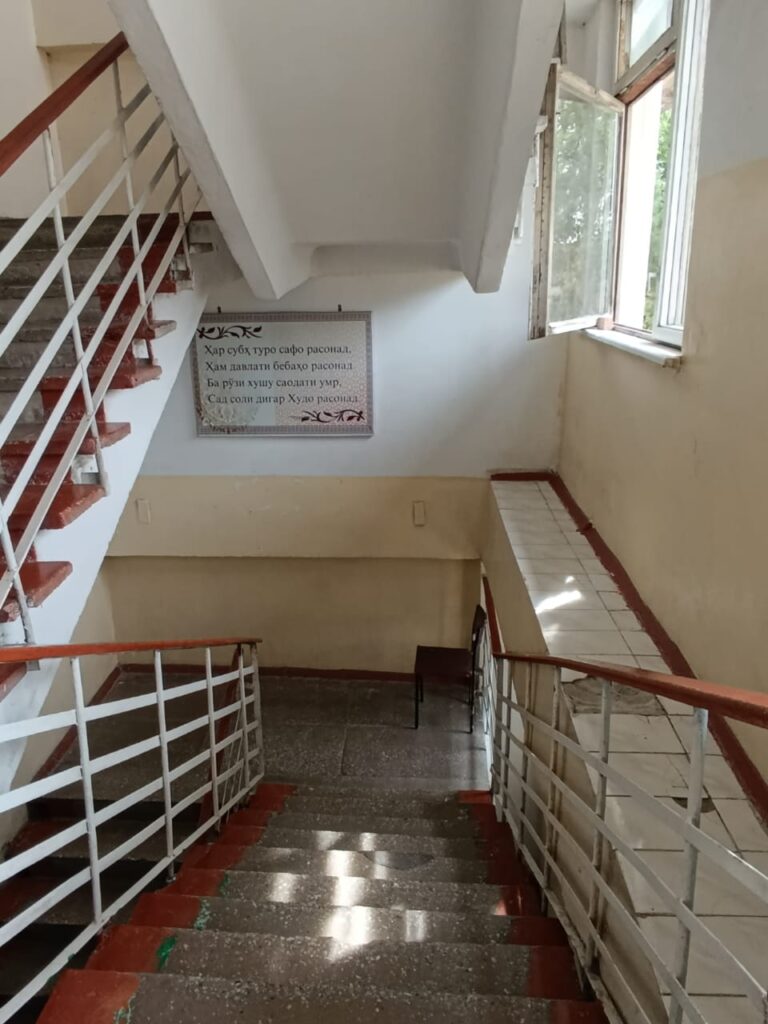
This project immediately jumped to the top of Salom Fund’s priority list. Our local contractors met with elevator mechanics to determine if the elevator could be repaired or if it would have to be replaced, and fortunately, it turned out that it could be repaired.
This summer, Salom Fund repaired the clinic’s elevator and restored it to full working order.
Fixing the machinery was only part of the solution. As a condition of our assistance, we required that an elevator attendant be hired in order to make sure that priority patients, including expectant mothers, cardiac patients, and elderly and disabled patients, can use the restored elevator when they need it. An elevator that is technically working but crowded or unstaffed doesn’t help the people who need it most.
Continued Progress at Polyclinic #2
Our work at Polyclinic #2 in Khujand, which serves more than 30,000 patients, also continues. Last fall, we completed a major renovation project there that included updating multiple offices, replacing 40 windows, and installing a railing on the front steps to improve access for patients with mobility issues.
This year, we returned to take on two more offices: a family medicine exam room and an ob-gyn exam room.
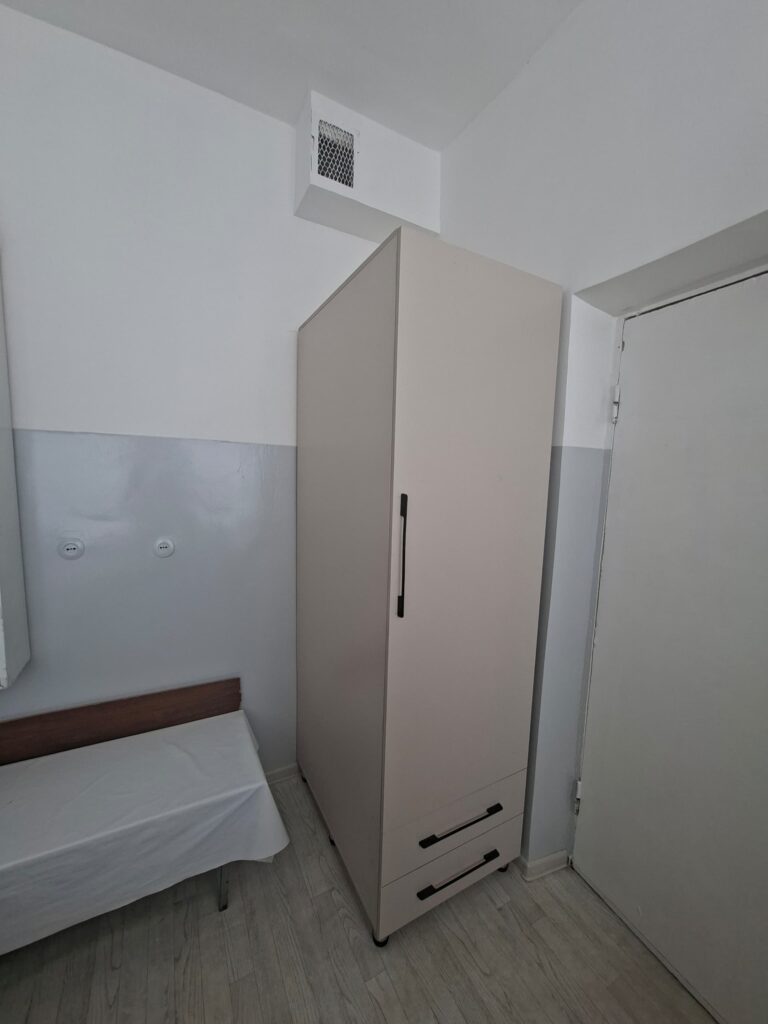
In both rooms, we replaced uneven linoleum flooring that posed a tripping hazard to patients and staff, installed new cupboards for medical supplies, and repaired damaged walls and ceilings, including sealing large holes leading to the vents of the original (non-operational) HVAC system, which rodents and insects had been using as entry points, creating unsanitary conditions in the offices.
These may sound like modest changes, but a safe floor and a clean and sound room shape how patients experience care and how well providers can do their jobs. They send a message to the community that the people who walk through the clinic’s doors deserve dignity and respect.
See the transformation for yourself below.
Here is a video of the gynecology exam room showing the original cabinet and some of the damage to the ceiling and floor:
And here is a video showing the gynecology exam room after Salom Fund’s repairs:
Here is a photo showing the new cupboard in the family practice exam room, along with the new linoleum floor and the repaired and repainted walls:
Supporting Staff at Polyclinic #1
Our work this year also brought us to Polyclinic #1 in Khujand, which serves a patient population of 35,000. There, we renovated the kitchen and break room used by nurse assistants, along with the hallway outside these spaces. We repainted the floors, replastered and repainted the walls, and recaulked and resealed the windows and doors. Later this fall, we will install an energy-efficient modern HVAC unit to improve the comfort of the rooms, which currently have neither heating nor air conditioning and get very hot in summer and very cold in winter as a result.
We prioritized these rooms because they were in extremely poor condition. Break rooms and kitchens for staff don’t directly affect patient access and care the way a clean, comfortable exam room or a working elevator does, but they matter for a different reason: they affect whether skilled nurse assistants stay in the public health system at all.
When working conditions are poor, experienced staff are more likely to leave for private clinics that primarily serve wealthier families, taking their skills and experience with them. Investing in these types of staff spaces is an investment in staff retention, and in making sure the public clinics that serve most of Khujand’s poor and middle class citizens keep the dedicated medical professionals who make them work.
Here’s a video showing the condition of one of the rooms before the renovations:
And here is a video showing some of the hallway and one of the renovated rooms:
Why This Work Matters
At Salom Fund, our mission is to support education and healthcare and to promote sustainable development and environmental causes in Tajikistan. Projects like these reflect the healthcare side of that mission: practical, lasting improvements that make it easier for people to get the care they need.
We focus on public polyclinics because they are the front line of the health system for so many families. Khujand’s neighborhood polyclinics, including Polyclinics #1, #2, and #5, serve mainly low- and middle-income patients. For families with limited resources, an uncomfortable or exhausting trip to the doctor can become a reason to delay care. Removing that barrier means more people can get the care they need, when they need it.
The impact of a single clinic goes far beyond the tens of thousands of patients each one serves every year. It also touches the lives of every patient’s family and friends, employers and coworkers, teachers and fellow students. When the quality and availability of care is improved, everyone who depends on it benefits, often for years to come.
Thank You
None of this would be possible without our supporters, volunteers, and local partners. Your generosity is the reason a pregnant woman in Khujand can ride an elevator to her appointment instead of climbing five flights of stairs, and the reason a cardiac patient can reach the fourth floor without risking their health.
There is more to do. Many clinics across Tajikistan face similar challenges, from aging infrastructure to accessibility barriers, and we are committed to continuing this work.
Want to help us reach more clinics? Donate today. Every contribution, large or small, helps us keep making healthcare more accessible for the people of Tajikistan.
